

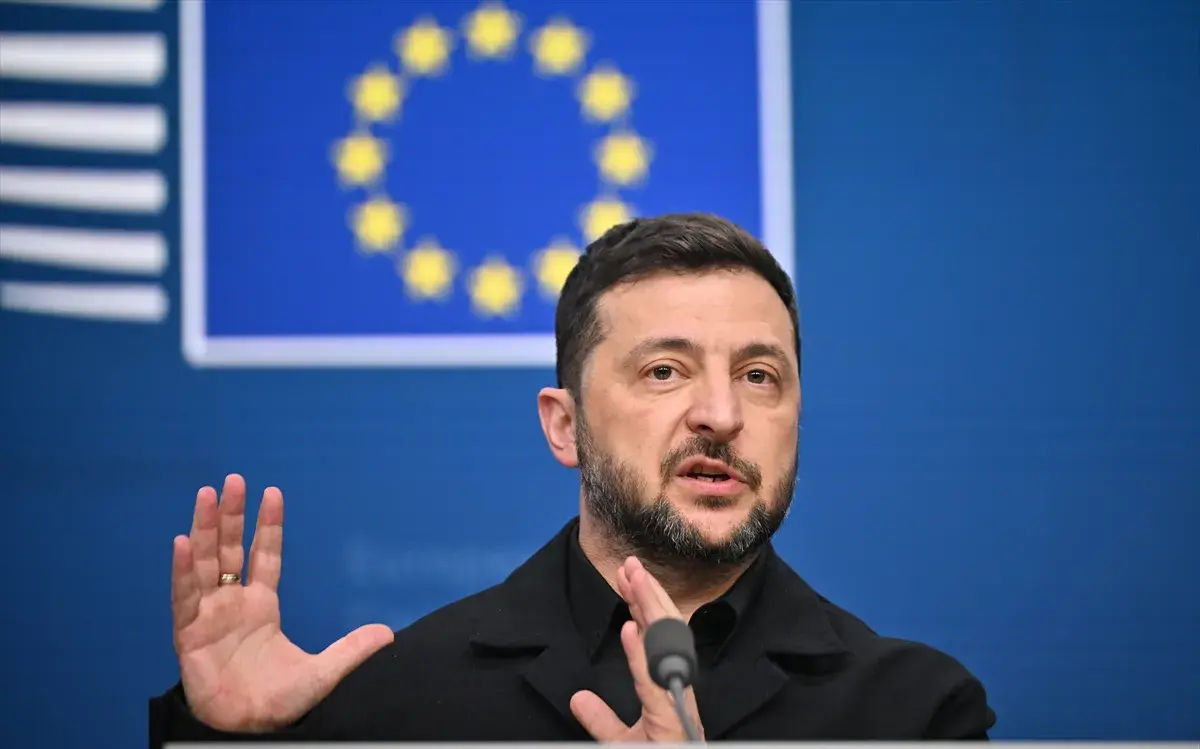
Ukrainian President Volodymyr Zelensky has escalated tensions with Hungary by threatening that the Ukrainian armed forces will personally contact Prime Minister Viktor Orbán if Budapest blocks a critical European Union loan package. The remarks, made during a press conference, have sparked outrage in Hungary and deepened the ongoing rift between the two neighboring countries.
The EU Loan and Zelensky’s Warning
Zelensky was speaking about a proposed €90 billion EU loan designed to help Ukraine purchase weapons, fighter jets, and other military equipment to defend against Russian aggression. Without naming Hungary directly, he stated: “If this person blocks the loan or its first tranche, we will give our armed forces the address of this person so they can call them and speak to them in their own language.” The comment was widely interpreted as a direct threat to Orbán, who has repeatedly used Hungary’s veto power to stall EU aid to Ukraine.
The loan is considered vital for Ukraine’s war effort, as the country faces continued Russian offensives and a critical shortage of munitions. However, Hungary has signaled it may block the package, citing unresolved disputes over energy supply and minority rights. The threat from Zelensky marks an unprecedented escalation in rhetoric between the two leaders, who have clashed frequently since the start of Russia’s full-scale invasion in 2022.
Hungary’s Opposition Reacts
In Hungary, the comments drew sharp criticism from opposition politician Péter Magyar, a rising figure who has positioned himself as a critic of both Orbán and foreign interference. Speaking at a public forum in the city of Szarvas, Magyar called on Zelensky to clarify his words and, if the reports were accurate, to retract them. “No Hungarian citizen or politician should be threatened by a foreign head of state,” Magyar said. He stressed that this principle applies not only to the current Orbán government but to any future administration.
Magyar also used the opportunity to criticize the Ukrainian government for its handling of the pipeline issue and called for a joint inspection of the infrastructure. His comments reflect growing domestic concern that the diplomatic spat could have real consequences for Hungarian energy security and political stability.
The Oil Pipeline Dispute
The underlying cause of the latest confrontation is a disagreement over the Druzhba oil pipeline, which carries Russian crude oil to Hungary and other European countries. In late January, a Russian drone attack damaged a section of the pipeline in Ukraine’s Transcarpathian region, home to a significant ethnic Hungarian minority. Ukraine stopped oil transit through the pipeline, citing repairs and security concerns.
Hungarian officials, including Orbán, have accused Ukraine of deliberately delaying the resumption of supplies for political reasons. “The pipeline is in better condition than ever,” Orbán claimed on Monday, insisting that there are no technical obstacles to restarting flows. Ukraine has not publicly confirmed this assessment, deepening suspicions in Budapest that Kyiv is using energy as a lever in broader negotiations.
The suspension has raised alarms in Hungary, which relies heavily on Russian oil via Druzhba for its refineries. Any prolonged disruption could lead to fuel shortages and higher prices, potentially undermining Orbán’s economic agenda ahead of upcoming elections. The dispute also highlights Hungary’s continued dependence on Russian energy, even as the EU seeks to reduce imports from Moscow.
Broader Context of Ukraine-Hungary Relations
The current crisis is the latest chapter in a long history of strained relations between Kyiv and Budapest. Since the Euromaidan revolution and Russia’s annexation of Crimea, Hungary has often been the most pro-Russian voice within the EU and NATO. Orbán has maintained close ties with Vladimir Putin, opposing sanctions and blocking military aid to Ukraine. He has also championed the rights of ethnic Hungarians in Ukraine’s Transcarpathian region, a issue that has caused repeated friction.
In 2017, Ukraine passed a controversial education law that limited instruction in minority languages, including Hungarian. Budapest retaliated by blocking NATO-Ukraine meetings and threatening to veto EU integration steps. The two sides have since made some progress, but mutual distrust remains high. Zelensky’s latest comments are likely to worsen relations further, especially as Hungary prepares to assume the rotating presidency of the Council of the EU in July 2024.
Meanwhile, the EU is caught in the middle. Many member states are frustrated with Hungary’s obstructionism, but they lack the tools to force compliance. Some diplomats suggest that the loan package could be approved without Budapest’s vote by using alternative legal mechanisms, but such moves would further isolate Hungary within the bloc.
Implications for European Unity
Zelensky’s threat also raises questions about the limits of diplomatic discourse in wartime. While the Ukrainian president is under immense pressure to secure resources for his country’s survival, his confrontational style risks alienating even sympathetic allies. The UK, France, and Germany have all called for de-escalation, urging both sides to resolve their differences through dialogue.
For Orbán, the incident provides domestic political ammunition. He can portray himself as a defender of Hungarian sovereignty against foreign bullying, a narrative that resonates with his nationalist base. Magyar’s response, however, shows that the opposition is also eager to capitalize on the crisis by positioning itself as a responsible alternative to Orbán’s confrontational diplomacy.
As the clock ticks toward the EU’s decision on the loan, all eyes will be on Budapest. Will Orbán yield to international pressure, or will he double down on his veto threat? And will Zelensky follow through on his alarming promise? The next few weeks could determine not only Ukraine’s military capabilities but also the future shape of European unity.
Source: DailyNewsHungary News