

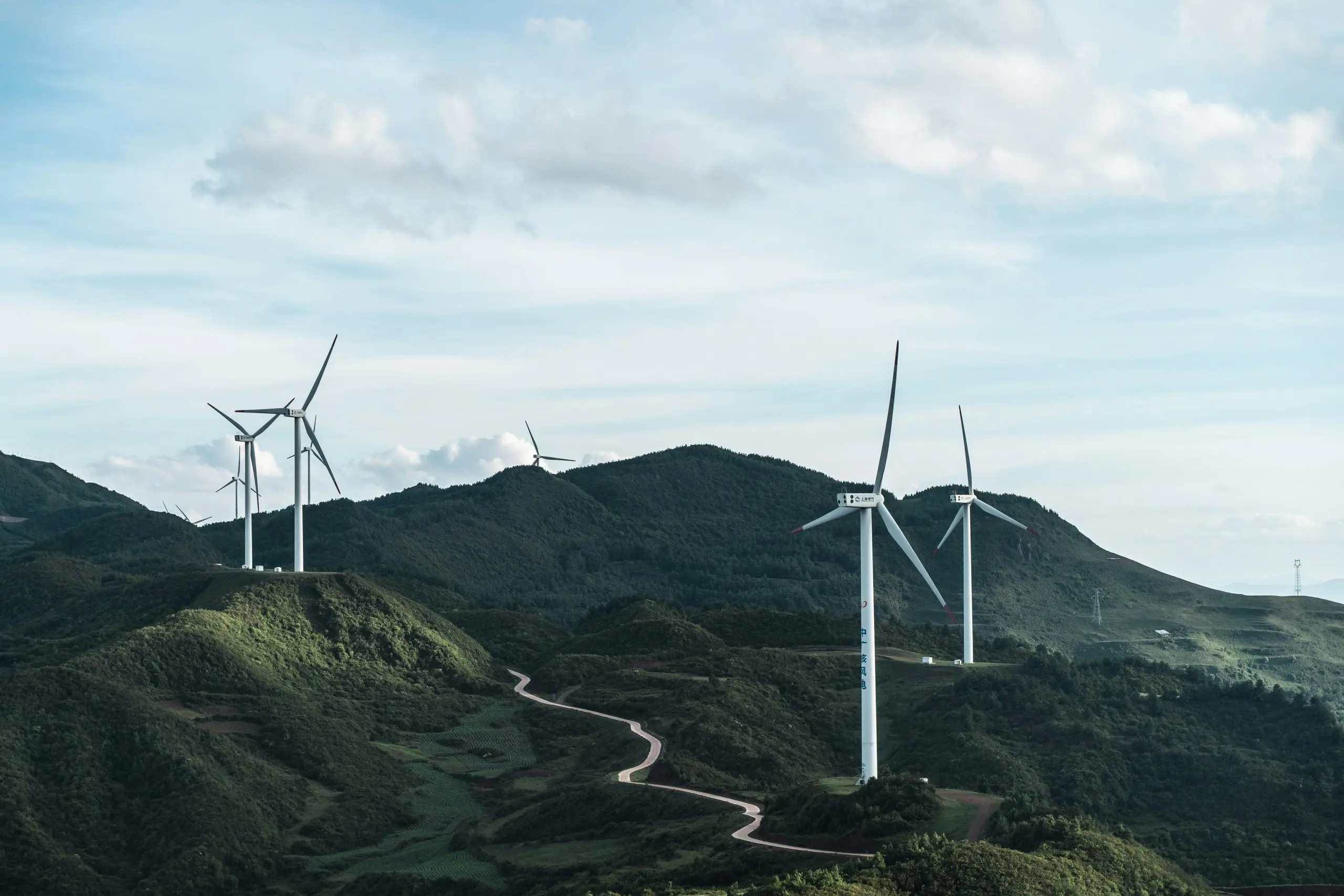
AI-Powered Mapping of Renewable Resources
China has achieved a landmark feat in artificial intelligence and energy management: a comprehensive AI-driven map of its entire renewable energy grid. This system integrates data from thousands of solar panels, wind turbines, hydropower stations, and battery storage facilities across the country. The AI processes satellite imagery, real-time weather feeds, historical energy production records, and grid load forecasts to produce an accurate, dynamic model of renewable generation potential and grid constraints.
The project, led by a collaboration between the Chinese Academy of Sciences and state grid operators, represents years of development. It leverages deep learning algorithms trained on petabytes of data to predict output from distributed energy sources. For example, the AI can forecast solar generation at a province-level with over 95% accuracy up to 72 hours in advance, accounting for cloud cover, seasonal variations, and air pollution.
Technical Breakthroughs and Methodology
The mapping process involved three major components. First, a satellite imagery analysis system using convolutional neural networks to identify and classify all renewable energy installations above a certain capacity. This includes utility-scale solar farms, rooftop solar arrays, wind farms, and pumped hydro storage. Second, a weather integration module that ingests data from 5,000+ meteorological stations and Doppler radar to create high-resolution wind and solar resource maps. Third, a grid optimization engine that uses reinforcement learning to simulate different dispatch scenarios, minimizing curtailment and balancing supply with demand.
This approach is far more sophisticated than previous attempts that relied on static surveys or manual reporting. The AI continuously updates its map as new renewable assets are built or retired, providing a living digital twin of the renewable energy system. Early tests showed that the AI could identify previously unmapped small-scale solar installations that were not in official records, revealing a significant underreporting of distributed generation capacity.
Implications for China's Energy Transition
China is the world's largest producer of renewable energy, with over 1,200 gigawatts of installed capacity as of 2024. However, integrating this variable generation into a stable grid has been a persistent challenge. The AI map enables grid operators to see exactly where and when renewable energy is available, reducing the need for fossil fuel backup. It also helps in planning new transmission lines and storage facilities by showing future generation hotspots.
Since deployment in pilot provinces, the system has reduced wind and solar curtailment by 18% on average, saving billions of kilowatt-hours that otherwise would have been wasted. This directly displaces coal-fired power and lowers carbon emissions. The AI also facilitates the growth of distributed solar by providing accurate net metering data, encouraging households and businesses to install panels.
Global Relevance and Lessons for Other Nations
The rest of the world should pay attention because China's project demonstrates that AI can solve one of the biggest obstacles to renewable energy adoption: grid integration. Many countries, especially in Europe and North America, face similar challenges with aging grid infrastructure and rising renewable penetration. By adopting similar AI techniques, they can avoid costly grid upgrades and accelerate their own clean energy transitions.
Furthermore, the open data philosophy behind part of the Chinese project — where some mapping algorithms and anonymized grid data have been shared with international researchers — provides a foundation for global collaboration. The International Energy Agency has cited this work as a template for modernizing power systems worldwide. Developing nations planning large-scale renewable deployment can especially benefit from the low-cost AI mapping methodology, which requires only satellite data and basic computing resources.
Historical Context and Evolution
China's journey toward AI grid management did not happen overnight. In the early 2000s, the country faced severe blackouts due to mismatched coal supply and demand. The national grid was fragmented, with provincial operators often hoarding power. The creation of the State Grid Corporation of China in 2002 began a centralization process. By 2010, smart meter deployments began, laying the data foundation. The 13th Five-Year Plan (2016-2020) explicitly called for AI in energy systems. This mapping project is the culmination of that strategy.
It also builds on China's strength in satellite technology, particularly the Gaofen series of Earth observation satellites, which provide meter-resolution imagery weekly. The AI models were trained on supercomputers such as the Sunway TaihuLight, once the world's fastest. Combining space assets with computing power and a centralized grid operator created the perfect conditions for this breakthrough.
Technical Details of the AI System
The core algorithm is a multi-task learning framework that simultaneously predicts generation, consumption, and grid stability. It uses a graph neural network to represent the physical grid topology, treating each substation as a node and transmission lines as edges. This allows the model to propagate information across the grid and simulate cascading failures. Training involves a reward function that penalizes carbon emissions, curtailment, and cost, optimizing for sustainability as well as reliability.
The system runs on a distributed cloud platform that can be accessed by regional grid control centers. It updates every 15 minutes with new data, and can run what-if scenarios for extreme weather, equipment failures, or sudden demand spikes. In drills, it successfully managed a simulated 50% renewable penetration scenario without blackouts, a level that would be challenging for conventional control systems.
Challenges and Limitations
Despite its success, the AI map is not without challenges. Data privacy concerns arise from the detailed energy consumption patterns that can be inferred. The system also relies on continuous satellite coverage, which is subject to cloud cover and delays. For offshore wind farms, the accuracy drops due to limited data. Moreover, the AI's decisions can be opaque, making it hard for human operators to trust and override. Efforts are underway to develop explainable AI modules that provide reasoning for each recommendation.
Another limitation is the reliance on China's centralized grid structure. In countries with fragmented or market-based power systems, a single integrated AI map may be harder to implement. Regulatory frameworks must evolve to allow real-time data sharing among competing utilities. China's experience shows that policy support and investment in digital infrastructure are prerequisites for such technology.
Future Prospects
Looking ahead, the next phase of the project aims to incorporate electric vehicles as mobile storage assets, using the AI to optimize charging times to absorb excess renewable generation. There are also plans to expand the map to include hydrogen production facilities and carbon capture units. The ultimate goal is to create a fully autonomous grid that can balance itself with near-zero human intervention, operating on 100% renewable energy by 2060, as per China's carbon neutrality pledge.
The AI mapping initiative is being shared with other countries through the Belt and Road Initiative's green energy programs, helping partners like Pakistan and Indonesia develop similar capabilities. This technology transfer could reshape global energy geopolitics, positioning China as a leader not just in renewable hardware, but in the software that runs the clean grid of the future.
Source: AI News News