

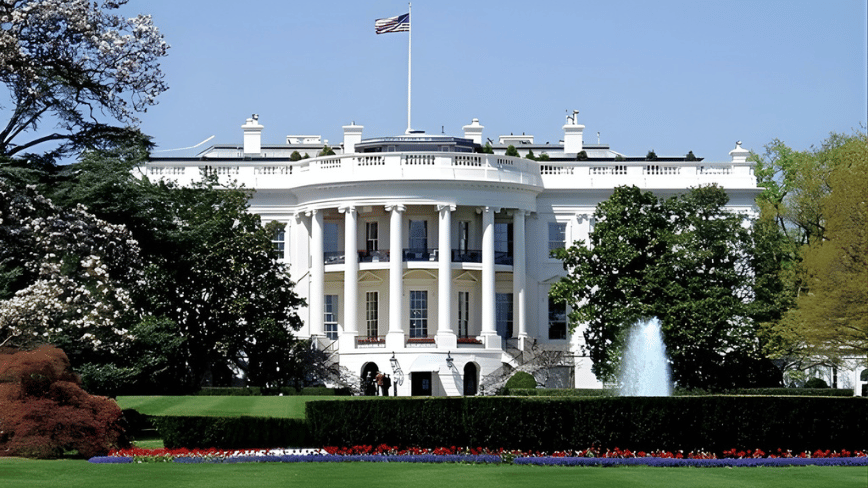
The Trump administration is conducting a multi-faceted campaign to prevent states from regulating artificial intelligence (AI) through various strategies, including a Department of Justice (DOJ) litigation task force and evaluations of state laws deemed burdensome. Despite these efforts, states have introduced a record number of AI bills, with significant enactments, and Congress has firmly rejected attempts at preemption.
Doug Fiefia, a Republican state representative from Herriman, Utah, who has a background in AI at Google, introduced House Bill 286, known as the Artificial Intelligence Transparency Act. This bill aimed to require frontier AI companies to publish safety and child protection plans and to provide whistleblower protections. Although it garnered unanimous support in a House committee, the White House opposed it and ultimately led to its failure in the Senate.
In a letter dated February 12, the White House categorically opposed Utah HB 286, labeling it an unfixable piece of legislation that contradicted the Administration's AI agenda. Despite not providing specific amendments that would make the bill acceptable, officials urged Fiefia not to advance it. His response emphasized the importance of states' rights, especially under a Republican administration, and highlighted that the bill was modest in scope, focusing solely on frontier AI developers.
The Federal Framework
The Trump administration's opposition to state regulation of AI consists of three key components. The first is Executive Order 14365, signed on December 11, 2025, which established an AI Litigation Task Force tasked with challenging state AI laws in federal court on constitutional grounds. This order also mandated an evaluation of state laws by the Secretary of Commerce and conditioned access to federal broadband funding on states refraining from enacting what the administration views as onerous AI regulations.
The second component is the evaluation conducted by the Commerce Department, which flagged laws in states like Colorado, California, and New York for further scrutiny. This evaluation will feed into the DOJ task force, which is expected to initiate federal legal challenges to state laws by summer 2026.
The third is a National Policy Framework for AI, released on March 20, which includes legislative recommendations across several pillars, advocating for Congress to preempt state laws that impose undue burdens and establish a national standard. The administration maintains that using copyrighted material for training AI does not infringe copyright laws and urges Congress to prevent coercive content moderation based on partisan agendas.
David Sacks, a former AI czar, articulated the administration's rationale by stating that differing state regulations create a challenging compliance environment for innovators. He raised concerns about algorithmic discrimination laws in Colorado and indicated opposition to state-level regulations driven by perceived ideological agendas.
State Actions
While the federal government debates regulation, states have not remained inactive. In 2023, fewer than 200 AI bills were introduced, but that number surged to 1,208 in 2025, with 145 enacted into law, marking the first year every state introduced at least one AI-related bill. In just the first two months of 2026, 78 chatbot-specific safety bills were introduced across 27 states.
Legislation such as California’s Transparency in Frontier Artificial Intelligence Act and Texas’s Responsible Artificial Intelligence Governance Act took effect on January 1, 2026. This growing body of state legislation signifies a bipartisan consensus that action cannot wait for a Congress that has repeatedly failed to address AI regulation.
Utah Governor Spencer Cox emphasized the need for states to regulate AI, asserting that it is crucial to ensure technology benefits humanity while preventing potential harms. He expressed particular concern about the implications of unregulated AI technology on children and announced a $10 million initiative aimed at workforce readiness for AI.
Congressional Stalemate
The executive order and the National Policy Framework require Congressional action to be legally binding, as they do not invalidate any existing state laws. Thus, regulated entities must continue to comply with state regulations until judicial rulings clarify the matter.
Senator Marsha Blackburn’s comprehensive TRUMP AMERICA AI Act is the most detailed federal proposal, which includes provisions for high-risk AI systems and the establishment of a liability framework for AI developers. However, it remains a discussion draft.
Congress has also rejected a provision in the One Big Beautiful Bill Act that aimed to impose a moratorium on state AI regulation, with a resounding Senate vote of 99-1 against it. This clear message indicates a lack of consensus on federal oversight of AI.
Financial Influences
The lobbying efforts surrounding AI regulation have intensified, with significant funding directed toward influencing candidates and policies. Leading the Future, a super PAC, raised $125 million in 2025 to support candidates favoring a uniform federal regulatory approach. Conversely, pro-regulation groups have also mobilized substantial financial resources to support candidates advocating for AI safeguards.
A coalition of 36 bipartisan state attorneys general has voiced opposition to federal preemption, citing the need for state protections against various AI risks, including scams and deepfakes. Colorado’s attorney general has pledged to challenge the executive order in court.
Regulatory Context
The administration’s revocation of previous safety regulations under Biden illustrates a broader trend: if the federal government refuses to regulate AI while simultaneously hindering state efforts, the landscape of AI governance will remain unregulated. In contrast, the EU has established a comprehensive regulatory framework, highlighting the divergent approaches to AI governance in the U.S. and Europe.
Doug Fiefia, who witnessed the demise of his transparency bill, is now campaigning for the state senate, representing a generation of lawmakers familiar with the tech landscape. They advocate for informed regulation rather than inaction, questioning whether the existing regulatory vacuum will endure or transform into a permanent state of affairs.