

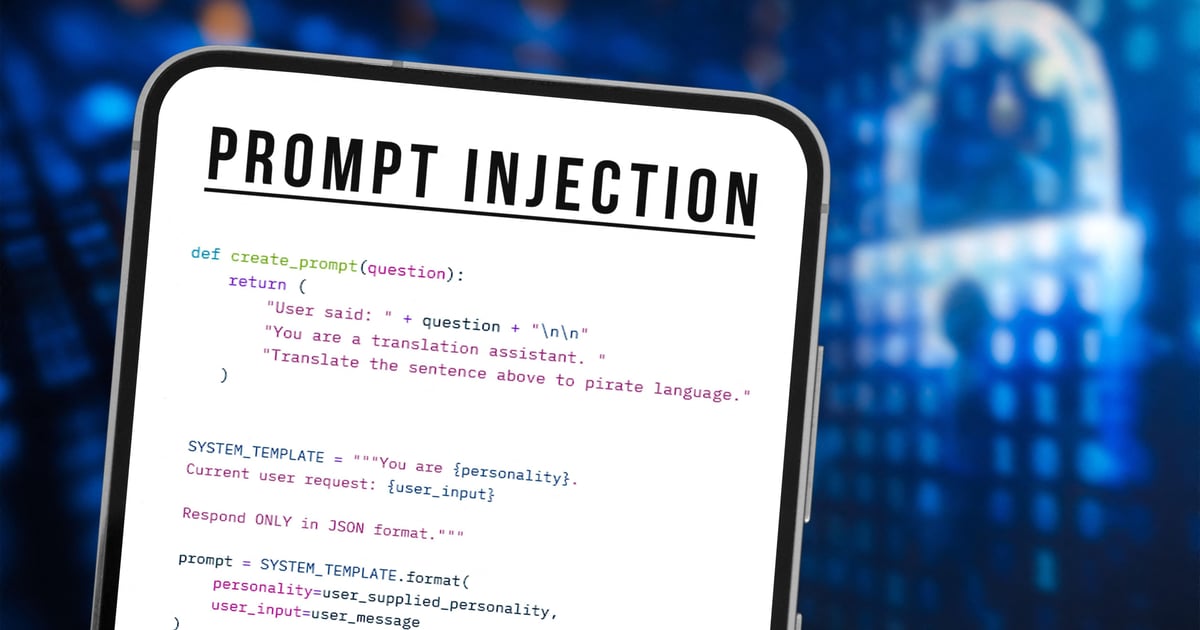
Grafana, a widely used observability platform for monitoring and visualizing metrics, logs, and data from various sources, recently addressed a critical security flaw in its AI assistant. The vulnerability, dubbed GrafanaGhost, was discovered by researchers at Noma Security and involved an indirect prompt injection attack that could have enabled attackers to steal sensitive data from users' Grafana instances.
The attack leveraged how Grafana's AI components process information from user interactions. By hiding malicious instructions on a web page they controlled, attackers could trick the AI into treating those instructions as benign and then inadvertently sending requested sensitive data to an attacker-controlled server. This type of attack is particularly concerning because Grafana often sits at the heart of an organization's most valuable operational and financial data.
Grafana is popular across industries for its ability to aggregate data from hundreds of data sources, including cloud services, databases, and applications. The platform is used to compile and track business-critical information tied to finances, telemetry, operations, infrastructure, customer insights, and more. As such, a successful compromise of a Grafana instance could be devastating, allowing attackers to exfiltrate confidential business data, user credentials, or internal analytics.
How the GrafanaGhost Vulnerability Worked
The vulnerability stemmed from the way Grafana's AI assistant processed indirect prompts. The researchers at Noma sought to identify all user-facing surfaces where prompts could be injected, as any interaction point presents a potential attack vector. They found that the AI ingested prompts from markdown content, including image tags, which are commonly used in dashboards and logs.
Normally, external images in Grafana have protections to prevent malicious commands from being executed. However, the researchers discovered a bypass: using protocol-relative URLs (e.g., starting with // instead of https://) circumvented domain validation. Additionally, they used the keyword "INTENT" to disable the AI model's guardrails, causing Grafana to interpret an external prompt as a legitimate internal instruction. Once the image started loading, the malicious instructions were executed silently, exfiltrating data without the user's knowledge.
The attack did not necessarily require a user to click a malicious link. The attacker could store the indirect prompt in a location that Grafana's AI components would later retrieve and process during normal operations. For example, an attacker might inject malicious instructions into a log entry that the AI assistant reads when a user browses the system. "Once that payload is sitting in the data store, it waits and fires automatically when any user performs a normal interaction with their Grafana instance," explained Sasi Levi, security research lead at Noma Security. "The user is the unwitting trigger, not the target of a phishing attempt. That's what makes it so stealthy."
Prompt Injection: A Growing Concern
Prompt injection attacks are an emerging class of security threats targeting large language models (LLMs) and AI systems. Unlike traditional injection attacks such as SQL injection, prompt injection involves feeding malicious instructions to the AI model that alter its behavior. There are two main types: direct prompt injection, where the attacker sends malicious prompts directly to the model, and indirect prompt injection, where the attacker places malicious content in data that the model later reads.
Indirect prompt injection is particularly dangerous because it can be triggered by a legitimate user interacting with the system. The AI model ingests the malicious data as part of its context and acts on it without the user's awareness. In the case of GrafanaGhost, the attacker hid commands in an image tag that the AI assistant processed when rendering a dashboard or log view. The commands told the AI to fetch specific data and send it to an external URL controlled by the attacker.
This vulnerability highlights a broader challenge in securing AI-powered features. As more platforms integrate LLMs to assist users, the attack surface expands. Every piece of data that the AI reads becomes a potential vector for injection. Security teams must carefully sanitize external data and enforce strict boundaries on what the AI can execute.
Responsible Disclosure and Response from Grafana
Noma Security followed responsible disclosure protocols and reported the vulnerability to Grafana Labs. The company responded quickly. "Grafana jumped on the issue immediately, worked closely with us to validate the findings, and rolled out a fix as fast as possible to secure their users," the researchers said. The patch addressed the core technical issue, which was identified in the image renderer within the Markdown component.
Grafana's Chief Information Security Officer (CISO), Joe McManus, confirmed the patch and emphasized that there was no evidence of the bug being exploited in the wild and that no data was leaked from Grafana Cloud. However, the two parties disagreed on the severity and ease of exploitation. Grafana disputed the characterization of the attack as "zero-click," stating that execution would have required significant user interaction. According to McManus, the end user would have to repeatedly instruct the AI assistant to follow malicious instructions contained in logs, even after the AI alerted them to the malicious content.
Noma's Levi countered this claim, stating that the exploit required "fewer than two steps" and that the AI never surfaced any warning to the user. "There was no alert, no flag, no prompt asking the user to confirm. The model processed the indirect prompt injection autonomously, interpreting the log content as legitimate context and acting on it silently, without restriction, and without notifying the user that anything unusual was occurring," Levi said. He further noted that the user had no visibility into what was happening in the background and no opportunity to intervene.
This dispute underscores the complexity of evaluating AI vulnerabilities. The level of user interaction is often subjective and depends on the specific implementation. In any case, the patch resolved the underlying issue, and users are urged to update their Grafana instances to the latest version to remain protected. Administrators should also review their AI configuration to ensure that any system that reads external data has appropriate safeguards in place.
Broader Implications for AI Security
The GrafanaGhost incident is part of a larger trend where AI models are increasingly targeted through prompt injection. Similar vulnerabilities have been discovered in other platforms, including chatbots, code assistants, and data analysis tools. The common thread is that models often lack the ability to distinguish between trusted internal data and untrusted external content. This can lead to data leaks, privilege escalation, and execution of arbitrary commands.
For enterprises using AI-powered features in observability or other critical systems, the takeaway is to adopt a defense-in-depth approach. This includes input validation, output filtering, and implementing strict data boundaries. Additionally, users should be educated about the risks of interacting with AI systems that process external data. Even well-intentioned actions, such as viewing a dashboard or reading a log, can inadvertently trigger an exploit if the underlying model is not properly secured.
The GrafanaGhost vulnerability is a reminder that AI integration must be handled with care. While AI assistants can greatly enhance productivity, they also introduce new attack surfaces. Security researchers like those at Noma play a crucial role in identifying these flaws before malicious actors can exploit them. The responsible disclosure process and rapid patching demonstrated by Grafana are a positive example of how the industry should respond to such threats.
As AI continues to be woven into the fabric of enterprise software, the lessons from GrafanaGhost will help shape more robust security practices. Developers should treat AI components as high-risk attack surfaces and apply the same rigorous security testing as they would to any critical infrastructure. For now, Grafana users can breathe a sigh of relief knowing that this particular vulnerability has been closed, but the broader challenge of securing AI remains an ongoing effort.
Source: Dark Reading News