

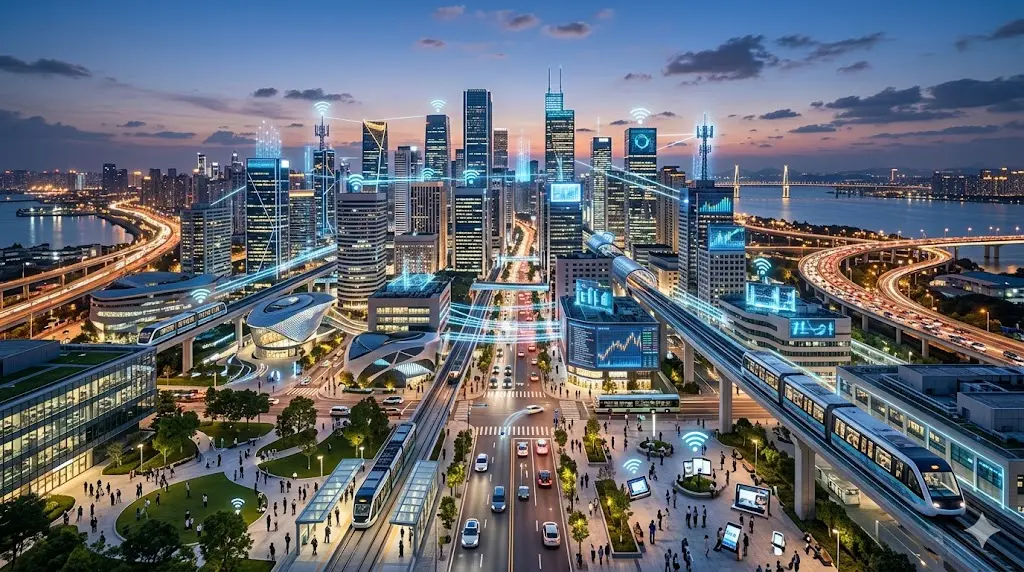
Urbanisation is becoming one of the biggest drivers of the digital economy because cities concentrate talent, infrastructure, data networks, businesses, and consumer demand in one place. As more industries move online, urban centers are turning into engines for innovation, remote work, fintech growth, smart logistics, and digital commerce.
Why urbanisation is becoming essential in the digital economy comes down to connectivity and opportunity. Cities create faster internet ecosystems, stronger startup networks, better digital infrastructure, and easier access to skilled workers, which helps businesses grow faster and adapt to technology-driven markets.
What Is Urbanisation in the Digital Economy?
Urbanisation in the digital economy refers to the increasing concentration of people, businesses, technology systems, and digital services in urban areas where innovation and economic activity happen more rapidly.
This isn’t just about skyscrapers or crowded metro systems anymore.
Modern urbanisation is deeply connected to:
Cloud computing infrastructure
Smart city systems
E-commerce logistics
Financial technology adoption
AI-powered services
Remote and hybrid work ecosystems
Here’s the thing. Digital economies rely heavily on fast communication, efficient delivery systems, and access to skilled labor. Cities naturally provide those advantages more efficiently than isolated regions.
Digital Urbanisation: The process where cities become technology-driven economic hubs powered by internet connectivity, digital infrastructure, data systems, and online business ecosystems.
Research from the World Bank and studies by the United Nations Human Settlements Programme suggest that urban areas generate a disproportionately large share of digital economic activity compared to rural regions.
Why Urbanisation Is Becoming Essential in the Digital Economy in 2026
2026 is expected to push digital urban growth even further because businesses increasingly depend on real-time infrastructure, connected consumers, and technology-enabled services.
What most people overlook is that the digital economy isn’t fully “virtual.” Physical cities still matter a lot.
Actually, they matter more than many predicted.
Talent Clusters Drive Innovation
When software developers, marketers, startup founders, data analysts, and investors live near each other, innovation tends to accelerate.
Ideas move faster in cities.
A fintech founder can meet investors in the morning, collaborate with developers by lunch, and launch a beta product within weeks. That speed becomes difficult in fragmented regions with weak digital infrastructure.
In my experience, proximity still shapes opportunity even in remote work culture. Video calls help, sure, but high-growth ecosystems often emerge where people physically interact.
Urban Infrastructure Supports E-Commerce
Fast delivery networks depend heavily on urban density.
Warehousing, transportation systems, fulfillment centers, and local delivery hubs all perform better when concentrated around major population centers.
That’s one reason digital retail companies continue investing aggressively in urban expansion.
Smart Cities Are Expanding
Governments worldwide are integrating technology into transportation, energy systems, healthcare, and public administration.
You’ll probably see more:
AI traffic management
Cashless transit systems
Sensor-based utilities
Public Wi-Fi infrastructure
Real-time data monitoring
Some cities are already testing predictive systems that optimize electricity use based on consumption patterns.
Honestly, ten years ago that sounded futuristic. Now it’s becoming routine.
Remote Work Didn’t Kill Urbanisation
This surprised a lot of analysts.
People assumed remote work would permanently reduce city importance. Instead, many urban economies adapted by becoming hybrid digital hubs offering co-working spaces, startup incubators, and tech-enabled living environments.
Cities didn’t disappear. They evolved.
How Urbanisation Supports the Digital Economy — Step by Step
1. Cities Build Digital Infrastructure
Urban areas attract investment in:
Fiber internet
Data centers
5G networks
Public digital systems
Businesses need stable infrastructure to scale online operations effectively.
Without connectivity, digital economies slow down fast.
2. Businesses Follow Skilled Workers
Technology companies often establish offices where talent already exists.
That creates feedback loops:
More companies attract more professionals
More professionals attract more startups
More startups attract investors
You end up with concentrated digital ecosystems that grow rapidly over time.
3. Consumers Increase Digital Demand
Urban populations use more digital services because convenience matters in fast-moving city life.
Food delivery apps, online banking, ride-sharing, streaming subscriptions, and digital healthcare platforms thrive in densely populated environments.
That demand drives further innovation.
4. Governments Invest in Smart Systems
Cities generate significant tax revenue, which governments often reinvest into digital public infrastructure.
Smart transportation and digital administration systems improve efficiency while supporting business growth.
At least from what I’ve seen, cities that modernize early tend to attract long-term investment faster.
5. Global Connectivity Expands
Urban business hubs connect more easily to international markets through airports, financial institutions, and technology networks.
That global access becomes increasingly valuable in cross-border digital trade.
The Counterintuitive Problem With Rapid Urbanisation
Bigger Cities Don’t Automatically Create Better Digital Economies
A lot of policymakers assume population growth alone creates innovation.
It doesn’t.
Some overcrowded cities struggle with poor infrastructure, weak internet systems, traffic congestion, and housing costs that actually slow economic growth.
Here’s my hot take: badly managed urbanisation can hurt digital progress more than help it.
A city filled with expensive housing and unreliable internet isn’t attractive to startups or digital workers no matter how large its population becomes.
That’s why infrastructure planning matters just as much as expansion itself.
Real-World Example: Startup Growth in Urban Tech Hubs
A mid-sized technology company relocated operations from a smaller regional town to a major urban center to improve hiring access and partnership opportunities.
Within eighteen months:
Hiring costs increased slightly
Product development accelerated
Investor meetings became easier
Customer acquisition improved
Revenue growth reportedly doubled because the business gained direct access to digital commerce ecosystems and specialized talent pools.
That tradeoff happens often. Urban operating costs rise, but growth opportunities rise faster.
Another Example: Smart Logistics and Delivery Systems
An e-commerce platform expanded into densely populated urban districts using AI-assisted route optimization and localized warehouse systems.
Delivery times dropped dramatically.
Customer retention improved because faster shipping created stronger purchasing habits.
What’s interesting is that infrastructure efficiency mattered more than advertising. Better logistics quietly increased profitability.
Most people underestimate how much urban systems shape digital consumer behavior.
Expert Tips and What Actually Works
Invest in Digital Infrastructure Before Expansion
Cities trying to attract technology businesses should prioritize:
Reliable internet
Stable power systems
Affordable co-working spaces
Smart transportation
Fancy branding campaigns don’t fix weak infrastructure.
Encourage Mixed-Use Urban Development
Tech workers increasingly prefer walkable neighborhoods where living, working, and entertainment exist close together.
Urban planning now affects business attraction more than many governments expected.
Don’t Ignore Secondary Cities
This is a trend worth watching.
Smaller cities with strong digital infrastructure may become major innovation hubs because operating costs are lower while internet access remains competitive.
Some companies are intentionally avoiding overcrowded mega-cities for this reason.
Expert Tip
Businesses entering urban digital markets should study mobility patterns before choosing locations. Access to transportation, internet reliability, and local workforce availability often matter more than prestigious office addresses.
Why Digital Economies Depend on Urban Data Systems
Digital economies run on data.
Cities generate enormous amounts of it every day through:
Mobile devices
Transportation systems
Retail transactions
Energy usage
Financial activity
That data helps businesses optimize services, predict demand, and improve customer experiences.
A ride-sharing platform, for example, becomes smarter as urban usage increases. Algorithms improve because dense populations create more behavioral information.
That’s one reason urban areas attract AI investment faster than rural regions.
What Challenges Could Slow Urban Digital Growth?
Housing Costs
Expensive housing pushes workers away from major tech hubs.
Several global cities are already facing talent migration because living costs became unsustainable for younger professionals.
Infrastructure Gaps
Some urban regions still lack reliable internet access despite large populations.
Digital growth becomes uneven when infrastructure investment falls behind population expansion.
Cybersecurity Risks
Smart cities collect massive amounts of data, which increases cybersecurity exposure.
Public systems need stronger digital protection as cities become more connected.
Environmental Pressure
Urban growth increases energy consumption and environmental stress.
Governments and businesses are now under pressure to build cleaner, more sustainable digital infrastructure systems.
People Most Asked About Why Urbanisation Is Becoming Essential in the Digital Economy
Why does urbanisation matter in the digital economy?
Urbanisation concentrates infrastructure, skilled workers, technology investment, and consumer demand in one location, which accelerates digital business growth and innovation.
How do cities support digital businesses?
Cities provide internet infrastructure, transportation networks, skilled labor, startup ecosystems, and customer access that help online businesses scale more efficiently.
Is remote work reducing urban growth?
Not completely. Remote work changed urban economies but didn’t eliminate city importance. Many urban centers adapted by creating hybrid work environments and digital innovation hubs.
What industries benefit most from digital urbanisation?
Technology, fintech, e-commerce, logistics, healthcare, streaming services, digital education, and AI-driven businesses often benefit significantly from urban digital infrastructure.
Can smaller cities compete in the digital economy?
Yes. Secondary cities with strong internet systems, affordable living costs, and modern infrastructure are becoming attractive alternatives to overcrowded mega-cities.
What are the risks of rapid urbanisation?
Poor infrastructure planning, rising housing costs, congestion, cybersecurity threats, and environmental pressure can slow digital economic progress if cities expand too quickly.
Will smart cities become more common by 2030?
Probably. Governments and businesses are investing heavily in smart transportation, digital utilities, AI traffic systems, and connected public infrastructure.
Final Thoughts on Why Urbanisation Is Becoming Essential in the Digital Economy
Why urbanisation is becoming essential in the digital economy really comes down to concentration. Cities bring together infrastructure, data systems, skilled workers, investors, and digital consumers in ways that accelerate innovation faster than isolated regions usually can.
Still, bigger isn’t always better.
Urban growth only works when infrastructure, affordability, and technology evolve together. The cities that understand that balance will probably lead the next phase of the global digital economy.
Businesses, startups, agencies, and SEO professionals can improve brand visibility and generate organic traffic through business press release services combined with targeted local SEO services. These platforms help strengthen SEO ranking with high authority backlinks, instant publishing opportunities, stronger media coverage, and performance-focused digital promotion strategies designed for long-term online growth.