

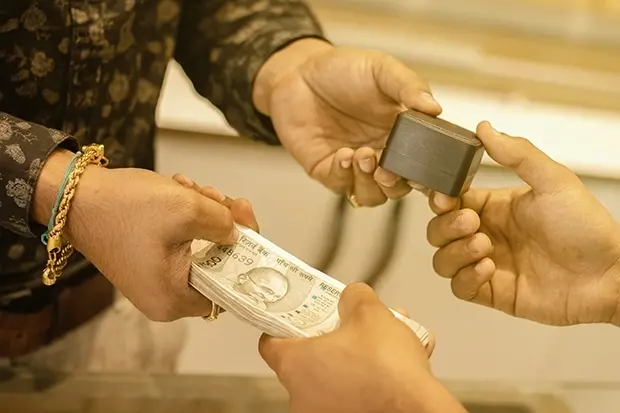
Indian Prime Minister Narendra Modi, in a reported appeal, has urged the country's citizens to refrain from buying gold for at least the next year. The request, detailed by the Indian news outlet News18, is part of a broader effort to ease the mounting pressure on India's foreign exchange reserves. Modi also advised cutting back on unnecessary foreign travel and reducing consumption of gasoline and diesel. The move underscores the delicate balance India faces as a major gold consumer that relies heavily on imports to feed its population's deep cultural appetite for the precious metal.
India is one of the world's largest gold consumers, with annual demand ranging between 700 and 800 metric tons. However, domestic production is negligible, yielding only about one to two tons per year. This gap forces the country to import more than 90% of its gold requirements. In the fiscal year 2025/26, gold imports hit an all-time high of $72 billion, a 24% increase from the previous year. That sum accounts for roughly 9% of India's total import bill, making gold the second-largest import category after crude oil.
The Cultural Significance of Gold in India
Gold holds a unique and enduring place in Indian society, far beyond its function as a commodity or investment. It is deeply intertwined with religious ceremonies, weddings, festivals such as Diwali and Akshaya Tritiya, and as a store of wealth passed down through generations. For many families, gold is a symbol of prosperity, security, and social status. This cultural heritage makes any government appeal to reduce gold consumption particularly challenging. Historically, attempts to curb gold imports have faced resistance, as seen during the 2013-2014 period when import duties were raised to record levels to control the current account deficit.
The financial implications are substantial. India's current account deficit (CAD) has been under pressure, exacerbated by higher oil prices and the strong dollar. Gold imports contribute significantly to the CAD, and in times of global uncertainty, the outflow of foreign currency for gold purchases can strain reserves. The Reserve Bank of India (RBI) has in the past intervened by increasing import duties on gold, initially raising them to 10% in 2013 and later reducing them slightly. In 2025, the government had already hiked duties again to discourage imports, but the record level of purchases indicates that demand remained robust.
Geopolitical Tensions and Reserve Pressures
The timing of Modi's appeal is closely linked to the evolving geopolitical situation. According to News18, rising energy prices and disruptions in global supply chains have intensified the strain on India's foreign exchange reserves. In just one week, India's foreign exchange reserves declined by approximately $7.8 billion, falling to $690.7 billion. While this level is still relatively high compared to many emerging economies, the pace of depletion has raised concerns among policymakers. The RBI uses reserves to manage the rupee's volatility and to ensure adequate cover for imports. A rapid drawdown can weaken the currency and increase inflation, particularly for imported goods like oil and electronics.
India's reliance on imported crude oil is another key factor. With oil prices fluctuating due to geopolitical tensions in the Middle East and sanctions on major producers, the cost of energy imports has risen substantially. This puts additional pressure on reserves, as the country must spend more dollars to meet its energy needs. Gold, being the second-largest import, becomes an obvious target for control measures. By asking citizens to voluntarily postpone gold purchases, the government hopes to reduce the outflow of dollars without resorting to more coercive measures like outright bans or drastically higher tariffs, which could fuel black markets and smuggling.
Recent Trends in Gold Imports
The data shows a dramatic drop in gold imports in recent months, which may reflect the effectiveness of earlier measures and the impact of the government's appeal. In January 2026, India imported nearly 100 metric tons of gold. By March, that number had fallen sharply to around 20-22 tons. For April 2026, preliminary figures suggest imports could be as low as 15 metric tons, one of the lowest monthly totals in almost three decades, excluding the COVID-19 pandemic period. This decline could be due to a combination of factors: higher import duties, the government's moral suasion, and potential slowdown in demand as prices remain elevated globally. International gold prices have been volatile, with the precious metal trading around $3,200 per ounce in early 2026, after touching all-time highs above $3,500 in late 2025.
Consumer behavior in India tends to be price-sensitive, but gold is also seen as a hedge against inflation and currency depreciation. The Reserve Bank of India itself has been a significant buyer of gold in recent years, adding to its reserves to diversify away from the US dollar. In 2025, the RBI purchased over 80 tons of gold, part of a global trend among central banks to increase gold holdings. This creates a paradox: while the government urges citizens to reduce gold buying, the central bank continues to accumulate the metal. However, the central bank's purchases are conducted on international markets or from domestic refineries and do not directly affect the current account deficit in the same way that consumer imports do.
Broader Implications for the Indian Economy
India's current account deficit is projected to widen to around 2.5% of GDP in 2026, according to economists, up from 1.8% in 2025. The trade deficit, which exceeded $300 billion in 2025/26, is being driven by both oil and gold imports. The government's appeal to reduce gold purchases is part of a broader strategy that includes boosting exports, promoting domestic manufacturing, and attracting foreign investment. The production-linked incentive (PLI) schemes in sectors like electronics, pharmaceuticals, and automobiles aim to reduce import dependence over the long term, but these are multi-year efforts.
Another dimension is the impact on the rupee. The Indian rupee has depreciated by about 8% against the US dollar in the past year, partly due to the strong dollar and outflows from emerging markets. A weaker rupee makes gold imports even more expensive in local currency terms, potentially dampening demand. However, it also increases the rupee value of existing gold holdings, which may encourage some households to sell or pledge their gold, as has been seen during economic hardships. The government could consider promoting gold monetization schemes, where individuals deposit gold with banks in exchange for interest and the gold is then lent to jewellers or sold to the RBI.
In conclusion, Modi's appeal to postpone gold purchases is a reflection of the difficult trade-offs India faces in a volatile global environment. Balancing cultural attachment to gold with macroeconomic stability requires careful policy calibration. The effectiveness of the voluntary appeal remains to be seen, but the sharp drop in imports in recent months indicates that both market forces and official persuasion may be working. As geopolitical tensions continue, and as energy prices remain elevated, India will need to continue monitoring its external balances and may need to consider additional measures if the situation worsens. For now, the government is counting on the cooperation of its citizens to steer the economy through these choppy waters.
Source: www.fondsprofessionell.at News