

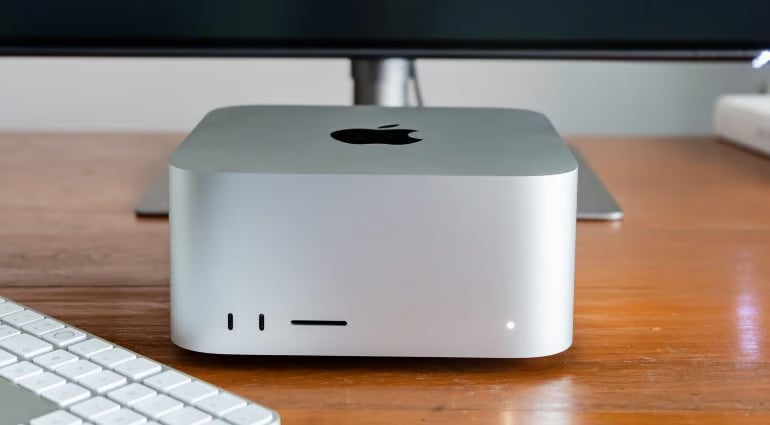
Apple's desktop Mac lineup is facing significant changes as the company quietly removes several high-memory configurations for the Mac Studio and Mac mini. According to recent reports, customers can no longer configure these machines with previously available RAM options, a move driven by soaring demand for AI-ready computers and ongoing global memory shortages.
Memory Options Disappear
The most notable reduction affects the M3 Ultra Mac Studio, which previously offered up to 256GB of unified memory. That configuration has been removed, capping the machine at 96GB. Similarly, the M4 Max Mac Studio no longer offers a 128GB memory option. On the Mac mini side, the M4 Pro variant loses its 64GB RAM configuration, leaving only 24GB and 48GB options. The standard M4 Mac mini also sees a cut: the 32GB version is gone, leaving just 16GB and 24GB variants.
These removals appear on Apple's online store, surprising many potential buyers who relied on high-memory options for demanding workflows in video editing, software development, and machine learning. The company has not issued a formal explanation, but the timing aligns with rising memory component costs and supply constraints.
Why Is This Happening?
The memory squeeze is tightly linked to artificial intelligence computing. Apple's unified memory architecture allows the system to access a large pool of high-bandwidth shared memory, which is particularly beneficial for running AI models locally. As more developers and businesses adopt local AI inference for privacy, latency, and cost reasons, demand for Macs with generous memory configurations has surged. Simultaneously, the global semiconductor industry is grappling with a shortage of high-capacity memory chips, partly due to the massive requirements of AI training infrastructure. These shortages have increased prices and tightened supply.
Apple's supply chain has been under pressure for months. During the company's recent earnings call, CEO Tim Cook acknowledged the issue. "We think, looking forward, that the Mac mini and Mac Studio may take several months to reach supply-demand balance," Cook said, adding that Apple underestimated demand for machines capable of running AI tools locally. He also noted that rising memory prices are expected to continue affecting the company in the coming months.
Impact on Wait Times and Prices
Even with fewer configurations available, wait times remain extended. Some Mac Studio models now show delivery estimates of 9 to 10 weeks, while certain Mac mini configurations could take 10 to 12 weeks to arrive. The shortages are beginning to spread beyond desktop Macs; higher-memory versions of Apple's MacBook lineup are also experiencing longer shipping delays.
Price pressures are also evident. Earlier this year, Apple removed the 256GB storage option from the Mac mini, effectively raising its starting price from $599 to $799. The latest RAM cuts further limit customization options, potentially forcing customers into more expensive pre-set configurations. This strategy could accelerate a shift toward purchasing Macs with maximum memory at purchase time, as aftermarket upgrades are not possible on most Apple Silicon machines.
Broader Industry Context
Apple is not alone in facing memory shortages. The AI boom has triggered an insatiable appetite for high-bandwidth memory (HBM) and large-capacity DRAM, which are crucial for training and running large language models. Micron Technology, SK Hynix, and Samsung have prioritized advanced memory chips for data center customers, leaving less supply for consumer electronics. This reallocation has created ripple effects across PC and smartphone makers, with many reporting longer lead times and higher component costs.
For developers and professionals who rely on Macs for AI work, the situation is particularly frustrating. Apple's unified memory architecture has been praised for its ability to handle AI models like large language models (LLMs) and diffusion models efficiently. Tools such as llama.cpp, MLX, and Core ML are optimized for operating on local hardware, and large memory configurations are essential for loading models with billions of parameters. The removal of 128GB and 256GB options from the Mac Studio limits the ability to run the most memory-intensive models without resorting to cloud services.
What This Means for Buyers
Prospective Mac Studio and Mac mini buyers should be prepared for limited availability and longer wait times. Those who still need high memory configurations may have to consider alternative strategies: purchasing a lower-memory model and relying on external memory? However, Apple Silicon Macs use unified memory that is soldered on-chip, so no external expansion is possible. Cloud AI services or purchasing used or refurbished models with the desired memory may be the only options for some users.
Additionally, Apple's product roadmap is uncertain. The company may reintroduce higher memory options once supply chains improve, but Cook's comments suggest that balance is months away. In the meantime, Apple's AI-focused customers may feel the squeeze as they compete for limited high-memory configurations.
Looking ahead, the long-term impact could reshape how Apple approaches memory in its desktop computers. The company might eventually transition to more modular designs or adopt new memory technologies, such as LPDDR6 or HBM for consumer devices, but such changes are not expected soon. For now, the AI demand wave is reshaping the desktop Mac market, and buyers are losing options as a result.
Source: TechRepublic News