

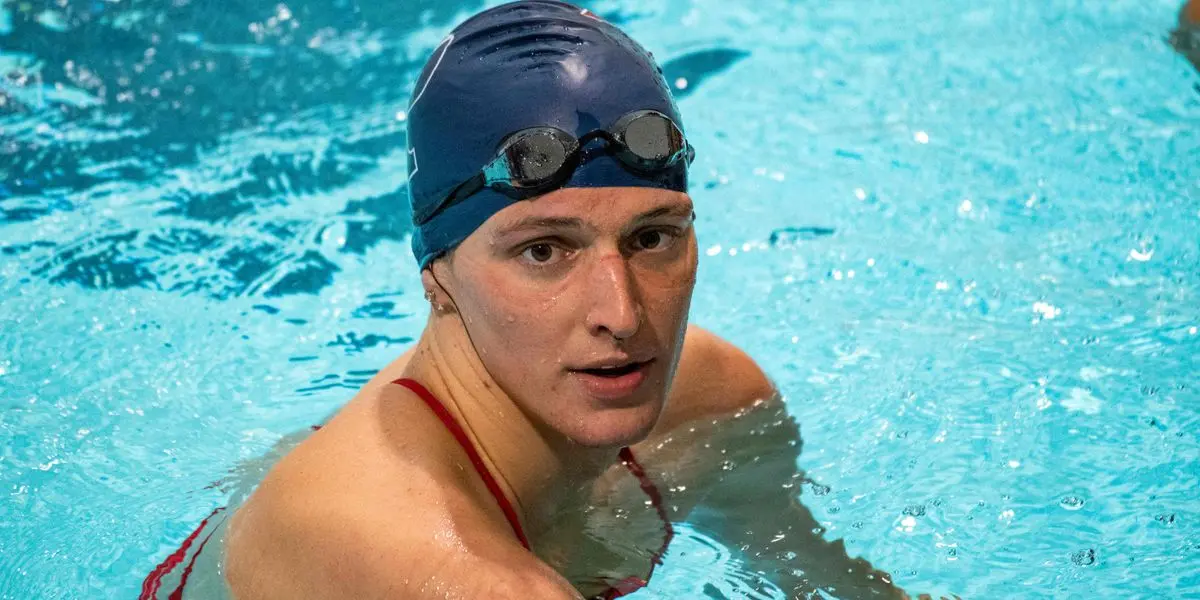
Florida Governor Ron DeSantis has escalated the culture war over transgender athletes by signing a proclamation that refuses to recognize Lia Thomas's historic NCAA Division I women's swimming title. Thomas, a transgender woman from the University of Pennsylvania, won the 500-yard freestyle at the NCAA Women's Swimming and Diving Championships in Atlanta on March 17, 2022, becoming the first openly transgender athlete to claim a top-tier NCAA championship. However, DeSantis, a Republican seen as a potential 2024 presidential candidate, declared that Emma Weyant, a freshman at the University of Virginia and a Sarasota, Florida, native, is the legitimate winner of the event.
Background of the Controversy
Lia Thomas, 22, transitioned from male to female and began hormone therapy in 2019 after three years of competing on the University of Pennsylvania men's swim team. Under NCAA rules in effect at the time, Thomas was eligible to compete in women's events after meeting testosterone suppression requirements for at least one year. Her victory in the 500-yard freestyle, with a time of 4:33.24, was 1.75 seconds ahead of Weyant. The race attracted national attention and protests from a small group of demonstrators who held signs reading "Save Women’s Sports."
DeSantis, in a press conference on March 22, 2022, stated, "By allowing men to compete in women's sports, the NCAA is destroying opportunities for women, making a mockery of its championships, and perpetuating a fraud." He signed a proclamation recognizing Weyant as the "best women’s swimmer in the 500y freestyle," adding, "In Florida, we reject these lies." The proclamation has no legal force outside Florida but sends a strong political signal.
Political and Legal Ramifications
DeSantis's move is part of a broader Republican push to restrict transgender athlete participation. Since 2021, over a dozen states, including Florida, have passed laws banning transgender girls and women from competing in female sports at the K-12 or college level. Florida's law, signed by DeSantis in June 2021, prohibits transgender female athletes in public schools and universities from competing on women's teams. However, because Thomas's victory occurred at an NCAA championship held in Georgia, Florida's law does not directly apply. The proclamation is symbolic, but it underscores the governor's stance and fuels his national profile.
LGBTQ+ advocacy groups condemned the proclamation. The Human Rights Campaign called it "a cruel and performative attack on transgender youth." Equality Florida stated that "DeSantis is using a young athlete's identity to score political points." Meanwhile, conservative groups like the Independent Women's Forum praised the governor for standing up for female athletes.
The Science and Fairness Debate
The core of the controversy lies in whether transgender women retain physiological advantages from male puberty, such as higher bone density, lung capacity, muscle mass, and testosterone levels. Critics argue that even after hormones suppress testosterone, these advantages persist, making competition unfair. Supporters of inclusion point to studies showing that after one to two years of hormone therapy, transgender women's performance metrics decline to levels comparable with cisgender women.
In February 2022, USA Swimming updated its eligibility criteria for transgender athletes, requiring testosterone levels below 5 nmol/L for at least 36 months, among other conditions. However, those rules were not applied at the NCAA championships, as they only affect USA Swimming events, not NCAA competition. The NCAA has its own policies that defer to the national governing bodies of each sport, but for swimming, it adopted the USA Swimming policy after the 2021-22 season. Thomas's victory thus remains valid under the rules in place at the time.
Impact on Lia Thomas and Emma Weyant
Lia Thomas has largely stayed out of the public eye since the championship, but she released a statement through the university expressing gratitude for the support and understanding the debate. Emma Weyant, a silver medalist in the 400-meter individual medley at the Tokyo Olympics, has not publicly commented on DeSantis's proclamation. Her father told local media that the family appreciates the support but wants to move forward. Weyant herself later won the 500-yard freestyle at the 2023 NCAA championships, suggesting that Thomas's victory did not permanently alter the competitive landscape.
Broader Context of Transgender Participation in Sports
The debate has intensified globally. The International Olympic Committee (IOC) in 2021 released a framework allowing each sport to set its own rules, but many federations have since tightened restrictions. In 2022, FINA, the world swimming federation, voted to bar transgender athletes from women's elite competition if they have undergone male puberty, creating a separate "open" category. World Athletics followed suit in 2023. The NCAA, after a period of review, also updated its policies to align with sport-specific rules, effectively banning most transgender women in sports like swimming after the 2022-23 season.
Critics of these bans argue that they are based on unfounded fears and that inclusion is possible with reasonable limits. They point to the small number of transgender athletes and the lack of evidence that they dominate or break records at elite levels. Proponents of bans cite fairness and the need to protect women's sports, which were developed after decades of inequality.
State vs. NCAA Authority
DeSantis's proclamation also highlights the tension between state governments and the NCAA. At least 20 states have laws or executive orders limiting transgender athlete participation, but these often conflict with the NCAA's nondiscrimination policies. The NCAA has threatened to move championship events out of states with such laws, but it has rarely followed through. Florida is home to major collegiate sports, and the state's law applies only to public schools, not private universities like the University of Miami or Florida State University's athletic programs (which are public but follow NCAA rules). The legal landscape remains fragmented, with lawsuits pending in several states.
Next Steps
As of 2025, Lia Thomas has not competed in any further NCAA events due to eligibility expiration and the new rules. She graduated from Penn and has spoken at a few events about transgender rights. Emma Weyant continues to swim for the University of Virginia and is preparing for the 2024 Olympic trials—though DeSantis's proclamation does not affect Olympic qualification, which is governed by the U.S. Olympic and Paralympic Committee and international federations. The debate over transgender athletes is likely to persist, with each new victory or legal challenge reigniting public attention.
DeSantis's action, while symbolic, reflects a deep divide in American society between those who champion inclusivity and those who prioritize perceived fairness. The NCAA, caught between federal nondiscrimination laws, state statutes, and public opinion, continues to adjust its policies, but no consensus has emerged. For now, the controversy over Lia Thomas's title remains a flashpoint in the broader battle over gender identity and sports.
Source: Spiegel News