

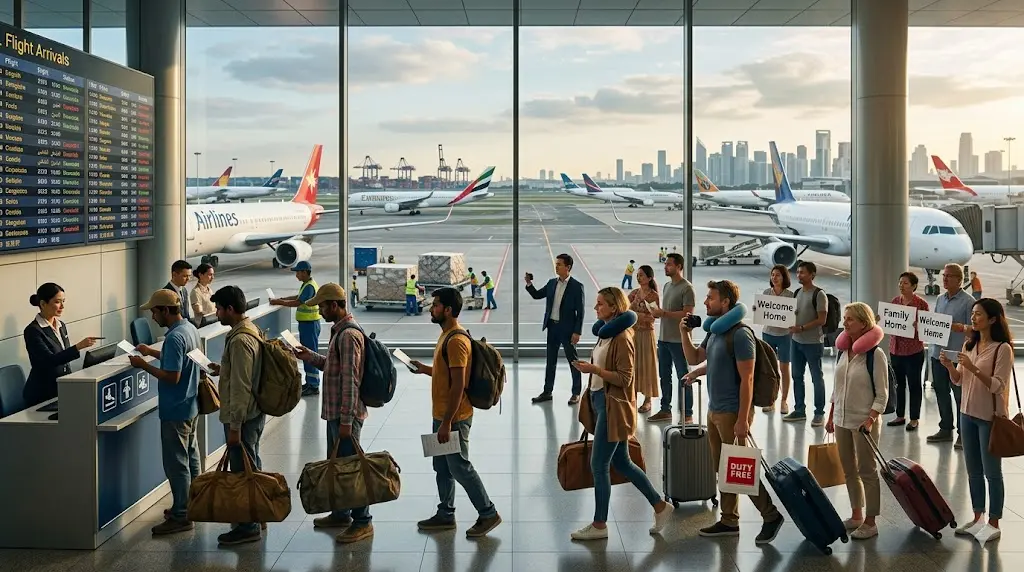
Global migration is reshaping the global tourism industry by creating new travel patterns, increasing visits to friends and relatives, expanding cultural tourism, and influencing destination marketing. As migrant communities grow across borders, tourism businesses are adapting their services, products, and experiences to meet changing traveler expectations in 2026 and beyond.
Why Global Migration Is Reshaping the Global Tourism Industry has become one of the most discussed topics among tourism experts, policymakers, and business leaders. Migration and tourism were once viewed as separate phenomena, but that distinction is fading quickly. People move across borders for work, education, family, and opportunity, and those movements create powerful travel networks that influence tourism demand worldwide.
Here's the thing: migration doesn't just affect where people live. It changes where people travel, why they travel, and how destinations compete for visitors. From family reunions to cultural festivals and heritage tourism, migration is creating entirely new opportunities for tourism businesses and destinations across the globe.
What Is Global Migration and Why Does It Matter?
Global Migration: The movement of people from one country or region to another for temporary or permanent residence due to economic, social, educational, environmental, or political reasons.
Global migration refers to the increasing movement of people across international borders. Millions relocate each year to pursue employment, education, business opportunities, or a better quality of life. While migration directly impacts labor markets and economies, its connection to tourism is often underestimated.
When people migrate, they maintain emotional, cultural, and family ties with their countries of origin. Those connections generate travel demand that can last for generations. Family visits, cultural celebrations, weddings, religious events, and heritage exploration all contribute to tourism activity.
What most people overlook is that migration creates long-term tourism ecosystems. A migrant who moves today may inspire decades of travel between two countries through family visits, business relationships, and cultural exchanges.
Expert Tip: Tourism businesses that understand migration patterns often identify emerging travel markets before their competitors do. Watching migration trends can provide valuable clues about future tourism demand.
Why Global Migration Matters in 2026
The relationship between migration and tourism has become stronger than ever in 2026.
International mobility continues to connect communities across continents. Advances in transportation, digital communication, and global employment opportunities have made maintaining cross-border relationships easier than previous generations could imagine.
One significant trend is the rise of diaspora tourism. Migrants and their descendants increasingly travel to reconnect with their heritage, explore family history, and experience cultural traditions firsthand. Destinations that were once overlooked are now attracting visitors seeking authentic cultural connections.
Another major factor is economic influence. Migrant communities often contribute substantial spending through international travel, accommodation bookings, dining experiences, shopping, and local transportation. Tourism boards are beginning to recognize these communities as highly valuable visitor segments.
In my experience, destinations that successfully embrace multicultural identities tend to perform better in attracting repeat visitors. Travelers increasingly seek genuine cultural experiences rather than standardized tourist attractions.
Migration is also changing destination branding. Cities and regions now promote diversity as a tourism asset, highlighting multicultural neighborhoods, international cuisine, and cross-cultural events.
How Global Migration Reshapes Tourism Industry Growth Step by Step
Understanding the process helps explain why migration has such a profound impact on tourism development.
Step 1: People Relocate Across Borders
Migration begins when individuals or families move to new countries. These migrants establish communities, build professional networks, and create social connections in their adopted homes.
Step 2: Cross-Border Relationships Expand
Even after relocating, migrants maintain close relationships with relatives and friends in their countries of origin. These relationships generate ongoing travel activity in both directions.
Step 3: Family and Heritage Tourism Increases
Relatives travel to visit family members abroad. Migrants return home for holidays, celebrations, and special occasions. Future generations often travel to explore ancestral roots.
Step 4: Cultural Exchange Creates New Attractions
Restaurants, festivals, cultural centers, and community events emerge from migrant communities. These become attractions that appeal to both local residents and international visitors.
Step 5: Business and Educational Travel Grow
Migration often stimulates international business partnerships, educational exchanges, and professional networking opportunities, further increasing travel demand.
Step 6: Destinations Adapt and Innovate
Tourism providers respond by offering multilingual services, culturally relevant experiences, and targeted marketing campaigns designed for diverse traveler groups.
How Migrant Communities Influence Tourism Demand
Migrant communities have become some of the most influential drivers of tourism growth.
Consider a realistic example. Imagine a family moving from South Asia to Europe. Parents maintain connections with relatives back home. Friends visit regularly. Family members attend weddings and celebrations across continents. Children later travel to learn about their heritage and culture.
One migration event can generate dozens of tourism trips over many years.
This pattern repeats across countless communities worldwide. Tourism economists often refer to this as Visiting Friends and Relatives tourism, which represents a substantial portion of international travel demand.
What makes this segment unique is its resilience. Even during economic uncertainty, family-related travel often continues because emotional connections remain strong.
The Rise of Cultural and Heritage Tourism
Cultural tourism is experiencing remarkable growth due to migration trends.
Second- and third-generation migrants frequently seek opportunities to reconnect with ancestral cultures. They visit historical sites, attend traditional festivals, learn local customs, and explore family histories.
I've noticed that younger travelers often value cultural authenticity more than luxury amenities. They want meaningful experiences that help them understand their identity and heritage.
This shift creates opportunities for destinations to develop heritage tours, genealogy programs, cultural workshops, and community-based tourism initiatives.
Unexpectedly, some destinations benefit more from heritage tourism than traditional sightseeing tourism. Visitors exploring family roots often stay longer and engage more deeply with local communities.
Expert Tip: Tourism operators should focus on storytelling and cultural authenticity rather than simply promoting attractions. Personal connections often drive stronger visitor engagement than famous landmarks.
How Migration Is Changing Destination Marketing
Tourism marketing strategies are evolving rapidly because of migration.
Traditional campaigns often focused on scenic attractions and leisure experiences. Today, many destinations emphasize cultural diversity, inclusivity, and community experiences.
Marketing messages increasingly highlight multicultural neighborhoods, international culinary scenes, and cultural festivals that reflect migration-driven diversity.
Let me be direct. Travelers aren't just buying vacations anymore. They're buying experiences, connections, and stories.
Destinations that understand this shift can position themselves more effectively in competitive tourism markets.
For example, a city with large immigrant communities may promote food tours, cultural celebrations, and neighborhood experiences that showcase its diverse identity. These offerings appeal to both international visitors and domestic travelers seeking authentic cultural encounters.
A Personal Observation About Migration and Tourism
A few years ago, I noticed something interesting while studying travel patterns. Many tourism discussions focused heavily on beaches, landmarks, and luxury hotels. Yet some of the busiest travel routes were driven primarily by family connections rather than traditional tourism attractions.
That observation changed my perspective.
A traveler visiting grandparents abroad may spend money on accommodation, transportation, restaurants, entertainment, and shopping just like any leisure tourist. The motivation differs, but the economic impact remains significant.
That's probably one of the most underestimated aspects of migration-related tourism.
Common Misconception: Migration Reduces Tourism
Many people assume migration decreases tourism because individuals permanently relocate.
The reality is often the opposite.
Migration frequently creates ongoing travel demand between countries. Migrants maintain relationships, host visitors, attend family events, and support business connections that encourage repeated travel.
In many cases, migration acts as a tourism multiplier rather than a tourism replacement.
A single migrant family can generate years of international travel activity involving multiple generations and extended social networks.
Expert Tips: What Actually Works for Tourism Businesses
Tourism organizations that want to benefit from migration-related travel trends should focus on cultural relevance and community engagement.
Developing multilingual services can improve visitor experiences and strengthen customer loyalty. Small changes, such as offering information in multiple languages, often make a noticeable difference.
Building partnerships with migrant communities can also help destinations identify emerging tourism opportunities. Community leaders frequently possess valuable insights into travel preferences and cultural expectations.
In my opinion, tourism businesses sometimes spend too much time chasing broad audiences while overlooking highly engaged niche markets. Migrant communities often represent exactly that type of opportunity.
Expert Tip: Authentic cultural experiences outperform generic tourism offerings in many migration-driven travel markets. Visitors want real connections, not staged presentations.
People Most Asked About Why Global Migration Is Reshaping the Global Tourism Industry
What is the connection between migration and tourism?
Migration creates travel demand through family visits, cultural connections, heritage exploration, business relationships, and educational exchanges. These activities contribute significantly to tourism growth.
Why does diaspora tourism matter?
Diaspora tourism attracts people seeking connections with their ancestral heritage. These travelers often stay longer, spend more locally, and participate deeply in cultural experiences.
How does migration influence destination marketing?
Migration encourages destinations to promote cultural diversity, authentic community experiences, international cuisine, and multicultural events that appeal to modern travelers.
Can migration increase tourism revenue?
Yes. Migrant communities generate substantial tourism spending through accommodation, transportation, dining, shopping, and entertainment activities associated with international travel.
Why is heritage tourism growing?
Many second- and third-generation migrants want to reconnect with family history and cultural traditions. This desire fuels increasing demand for heritage tourism experiences.
How should tourism businesses respond to migration trends?
Businesses should embrace cultural diversity, offer multilingual services, create authentic experiences, and develop marketing strategies that reflect changing traveler demographics.
Does migration only affect international tourism?
No. Migration also influences domestic tourism by encouraging travel between regions, cultural communities, and urban centers with diverse populations.
Final Thoughts
Why Global Migration Is Reshaping the Global Tourism Industry is no longer a future trend; it's a present reality. Migration influences where people travel, how destinations market themselves, and what experiences travelers seek. As global mobility continues to connect communities across borders, tourism businesses that understand migration-driven travel patterns will be better positioned to attract visitors, build loyalty, and create meaningful experiences. The strongest tourism destinations in 2026 and beyond will likely be those that recognize cultural connections as one of the industry's most powerful growth drivers.
Expand your digital presence with press release distribution services and advanced SEO services designed to boost brand visibility, improve SEO ranking, and drive organic traffic. Our network delivers instant publishing opportunities, high authority backlinks, wider media coverage, and measurable marketing results for businesses, agencies, startups, bloggers, and SEO professionals seeking sustainable online growth and stronger market authority.