

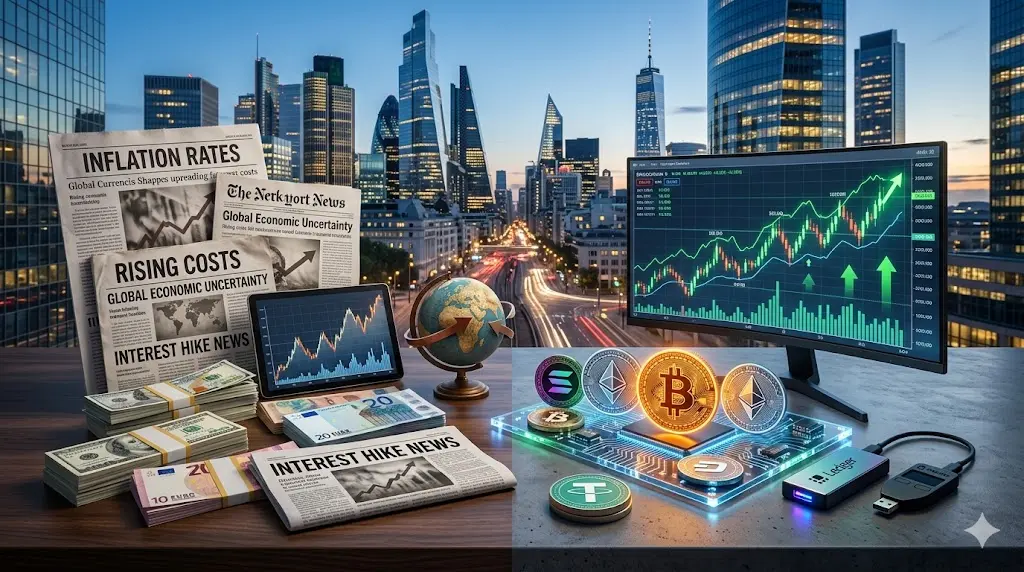
Global inflation is changing how people think about money, savings, and investment security. As living costs rise and traditional currencies lose purchasing power, many investors are turning toward digital assets as an alternative store of value and a hedge against economic instability.
Inflation is pushing individuals, businesses, and institutions to explore digital assets because traditional financial systems often struggle during periods of rising prices. Digital currencies, tokenized assets, and blockchain-based finance are gaining attention as people search for faster, borderless, and inflation-resistant financial options.
What Is Global Inflation and Why Does It Matter?
Global inflation refers to the broad increase in prices across economies worldwide. Food becomes more expensive. Fuel costs rise. Rent jumps unexpectedly. Even basic services start eating into household budgets faster than most people expect.
Here's the thing: inflation doesn't just affect shopping bills. It changes investor behavior too.
When inflation rises sharply, fiat currencies tend to lose purchasing power over time. That's why many investors begin searching for assets that might hold value better during economic uncertainty. Gold has historically played that role, but digital assets are increasingly entering the same conversation.
Digital Assets — Digital assets are blockchain-based financial assets such as cryptocurrencies, tokenized securities, NFTs, and stablecoins that can be stored, traded, or transferred electronically.
In my experience, what most people overlook is how inflation reshapes trust. Once consumers stop trusting traditional savings methods to protect their money, they start exploring alternatives very quickly.
Why Global Inflation Is Influencing the Future of Digital Assets in 2026
The relationship between inflation and digital assets is becoming stronger in 2026 because economies are more connected than ever before. One central bank decision in a major country can affect markets globally within hours.
People aren't just buying digital assets for speculation anymore. Many are using them as financial tools.
A realistic example helps explain this. Imagine a small business owner dealing with rising import costs and weakening local currency value. Instead of holding excess cash in a depreciating currency, they may move part of their reserves into digital assets or stablecoins tied to stronger currencies. That shift probably seemed unusual five years ago. Now it happens regularly in many regions.
Another factor is institutional adoption. Large financial firms have started exploring blockchain-based financial infrastructure because inflation creates pressure for faster settlement systems, lower transaction costs, and more transparent asset management.
What makes this interesting is the unexpected side effect inflation has on younger investors. Many younger users already distrust traditional banking systems after watching repeated economic shocks. Digital assets feel more accessible, more transparent, and frankly more aligned with how they already live online.
Expert Tip
Short-term price volatility often scares new investors away from digital assets during inflation spikes. But long-term adoption trends usually matter more than temporary price swings, at least from what I've seen in market cycles over the last several years.
How Inflation Changes Investor Behavior Step by Step
Understanding how inflation pushes people toward digital assets becomes easier when you break the process down.
1. Purchasing Power Starts Falling
Consumers first notice inflation through daily expenses. Groceries, transportation, housing, and utilities all rise steadily. Savings accounts suddenly feel less useful because interest rates fail to keep pace with inflation.
That's usually the first warning sign.
2. Traditional Investments Face Pressure
Stocks, bonds, and real estate often react differently during inflationary periods. Some perform well temporarily, while others struggle under rising interest rates and reduced consumer spending.
Investors begin diversifying more aggressively during this stage.
3. Alternative Assets Gain Attention
This is where digital assets enter the discussion. Investors start exploring cryptocurrencies, decentralized finance platforms, tokenized commodities, and blockchain-backed payment systems.
Not everyone jumps in immediately. Some stay skeptical for years.
Still, curiosity grows.
4. Businesses Experiment With Blockchain Payments
Inflation also affects cross-border transactions. Currency fluctuations make international trade more expensive and unpredictable. Blockchain payment systems can reduce delays and transfer costs in certain cases.
A mid-sized exporter, for example, might use stablecoins for faster international settlement when local banking delays become too costly.
5. Governments Respond With Regulation
As digital assets become more widely used during inflationary periods, governments usually introduce stricter oversight. Some countries encourage blockchain innovation, while others impose tighter controls.
That tension between innovation and regulation will probably define the next decade of digital finance.
Why Some Digital Assets Perform Better During Inflation
Not every digital asset benefits equally from inflation fears.
That's an important distinction many beginners miss.
Some cryptocurrencies have limited supply models, which attract investors seeking scarcity-based assets. Others are tied to decentralized finance ecosystems offering lending, borrowing, or yield opportunities.
Stablecoins serve a different purpose entirely. They aim to reduce volatility by linking their value to fiat currencies or reserve assets. Businesses often prefer them for operational stability rather than speculative growth.
Meanwhile, tokenized real-world assets are becoming more attractive because they combine blockchain efficiency with tangible value sources like property, commodities, or treasury-backed instruments.
Common Misconception About Inflation and Crypto
A lot of people assume inflation automatically causes all cryptocurrencies to rise in value.
That simply isn't true.
Digital asset markets still react to liquidity, regulations, investor psychology, global interest rates, and technology adoption. Inflation may increase interest in digital finance overall, but weaker projects can still collapse during economic stress.
I've seen investors treat every blockchain project like a guaranteed inflation hedge. Usually, that doesn't end well.
What Most People Overlook About Inflation and Blockchain Technology
Here's a counterintuitive point worth considering.
High inflation doesn't just increase interest in digital currencies. It also increases demand for transparent financial systems.
Blockchain technology offers publicly verifiable transaction records. During periods of economic uncertainty, transparency becomes surprisingly valuable.
Businesses want clearer supply chains. Investors want auditable reserves. Consumers want faster transfers without excessive banking friction.
Inflation indirectly accelerates demand for all those features.
A hypothetical example makes this clearer. Imagine a regional supplier facing rapidly changing costs due to inflation. Using blockchain-based smart contracts could help automate payments and reduce settlement disputes when currency values fluctuate week to week.
That operational efficiency matters almost as much as investment potential.
How Governments Are Reacting to Digital Asset Growth
Governments worldwide are approaching digital assets very differently in 2026.
Some countries are building regulatory frameworks to encourage blockchain innovation. Others remain cautious because decentralized financial systems reduce direct central oversight.
Central bank digital currencies are also becoming part of the conversation. These government-backed digital currencies aim to modernize payment systems while maintaining monetary control.
What most guides miss is that inflation often speeds up government experimentation.
When traditional financial systems face pressure, policymakers become more willing to test new infrastructure models. That's why digital finance discussions are now happening at central banks, treasury departments, and major financial institutions globally.
Expert Tip
Pay close attention to regulation trends rather than social media hype. Regulatory clarity often influences long-term adoption far more than temporary online excitement.
The Role of Institutional Investors in Digital Asset Expansion
Institutional investors are no longer treating digital assets like a niche experiment.
That's a huge shift.
Hedge funds, asset managers, payment processors, and multinational corporations increasingly explore blockchain-based systems because inflation pressures operational efficiency and portfolio diversification.
Some institutions allocate small percentages of reserves into digital assets. Others focus on blockchain infrastructure itself rather than cryptocurrencies directly.
In my opinion, infrastructure adoption matters more than short-term token prices. Real transformation usually happens quietly behind the scenes before the public fully notices.
A realistic case study illustrates this well. A logistics company dealing with inflation-driven fuel and currency volatility might adopt blockchain payment rails to reduce international transaction delays. Customers probably wouldn't even realize blockchain technology was involved.
Yet the financial impact could still be significant.
Could Digital Assets Replace Traditional Financial Systems?
Probably not entirely.
At least not anytime soon.
Traditional banking systems still provide stability, lending infrastructure, legal protections, and consumer trust in many economies. Digital assets are more likely to coexist alongside traditional finance rather than fully replace it.
Hybrid systems are already emerging.
Banks now experiment with blockchain settlement networks. Payment providers integrate stablecoin transfers. Investment firms offer tokenized asset exposure within regulated environments.
The future will likely involve integration instead of replacement.
That distinction matters because many headlines frame digital assets as an "all or nothing" revolution. Real financial evolution tends to happen gradually, with old and new systems overlapping for years.
Expert Tips: What Actually Works During Inflationary Markets
If you're trying to understand how inflation affects digital assets, focus on fundamentals instead of hype cycles.
Start with utility. Does the asset solve a real financial problem? Can businesses realistically adopt the technology? Is the network secure and scalable?
Those questions matter far more than celebrity endorsements or viral market trends.
I've noticed that investors who survive inflationary periods usually avoid emotional decision-making. They diversify carefully, research projects thoroughly, and stay patient during volatility.
Another practical strategy involves monitoring macroeconomic indicators alongside blockchain developments. Inflation rates, central bank policies, employment data, and interest rates all influence digital asset markets indirectly.
Short-term speculation might produce temporary gains, sure. But sustainable growth usually follows real-world adoption.
People Most Asked About Why Global Inflation Is Influencing the Future of Digital Assets
Why does inflation increase interest in digital assets?
Inflation reduces the purchasing power of traditional currencies, which encourages investors to seek alternative stores of value. Digital assets attract attention because they offer decentralized access, global transferability, and, in some cases, limited supply models.
Are cryptocurrencies safe during inflation?
Cryptocurrencies can provide diversification opportunities, but they remain volatile investments. Some assets perform well during inflationary periods, while others decline sharply. Research and risk management still matter a lot.
Can digital assets protect against currency devaluation?
Certain digital assets may help individuals hedge against local currency weakness, especially in regions facing rapid inflation. Stablecoins and blockchain payment systems are often used for cross-border value transfer during economic instability.
Why are institutions investing in blockchain technology?
Institutions see potential efficiency gains in blockchain systems, including faster settlement, transparent transactions, and lower operational costs. Inflation pressures businesses to improve financial efficiency wherever possible.
Will governments regulate digital assets more heavily?
Most likely, yes. As adoption grows, governments are increasing oversight to address taxation, consumer protection, and financial stability concerns. Regulatory clarity may also encourage broader institutional participation.
Is blockchain adoption slowing down because of inflation?
Interestingly, inflation may actually accelerate blockchain adoption in some sectors. Economic pressure often pushes businesses to explore faster, cheaper, and more transparent financial systems.
What role do stablecoins play during inflation?
Stablecoins help reduce volatility by maintaining value relative to reserve assets or fiat currencies. Businesses and investors often use them for payments, remittances, and operational liquidity management.
Final Thoughts on Why Global Inflation Is Influencing the Future of Digital Assets
Global inflation is reshaping financial behavior faster than many analysts predicted. Rising costs, weakening currencies, and economic uncertainty are pushing individuals and institutions toward digital alternatives that offer flexibility, transparency, and new financial possibilities.
Digital assets won't magically solve every economic problem. But they are becoming increasingly relevant in a world where trust in traditional monetary systems keeps getting tested. That trend alone could define the next chapter of global finance.
Our network supports businesses, agencies, startups, and SEO professionals looking to improve brand visibility through press release distribution services and trusted digital marketing services. With high authority backlinks, instant publishing opportunities, stronger SEO ranking potential, and expanded media coverage, these platforms help drive organic traffic while building long-term online authority for growing brands.