

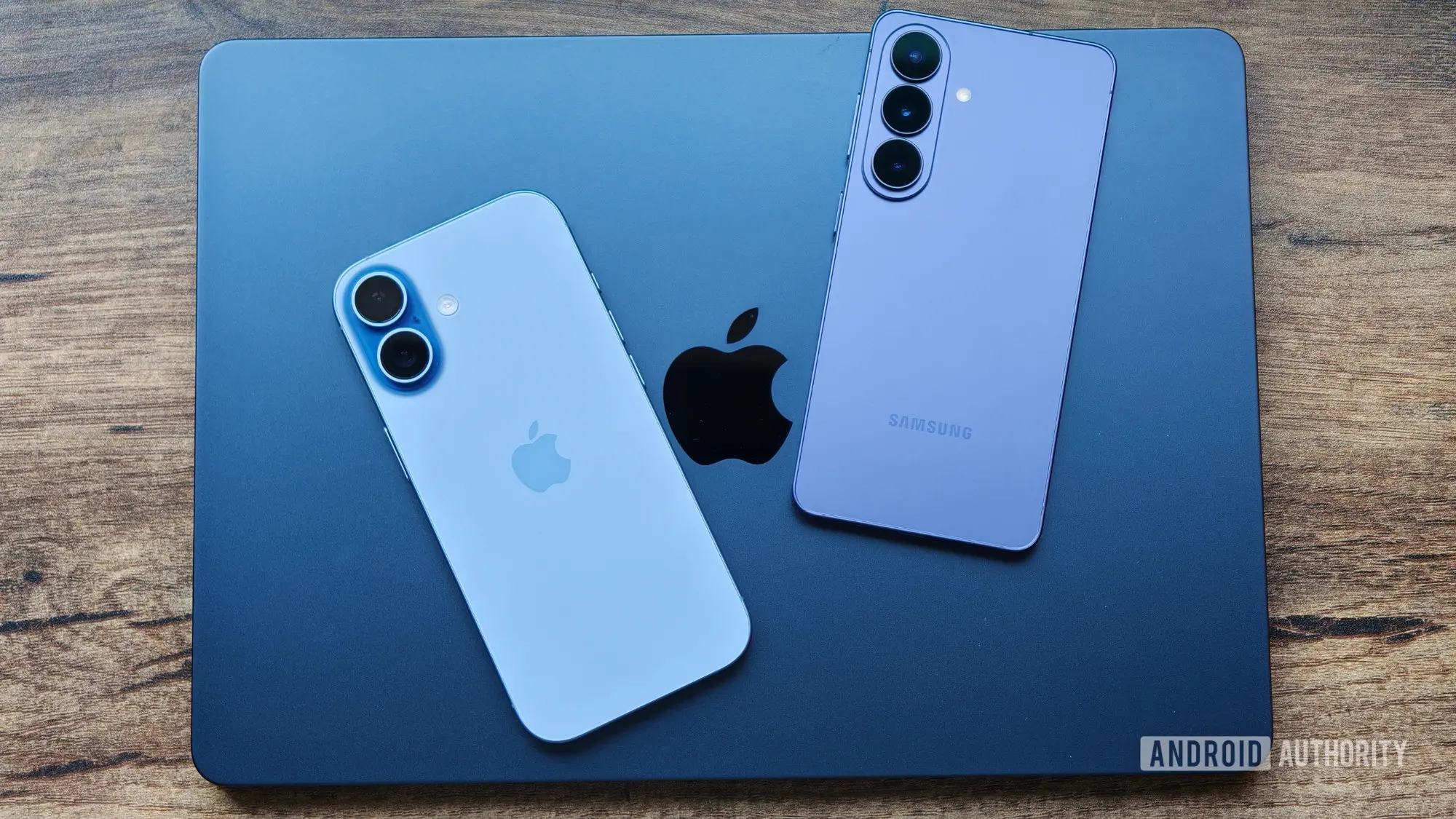
The US smartphone market has entered a period of contraction, but the pain is not evenly distributed. According to new data from Counterpoint Research, total smartphone sales in the United States fell 5.7% year-over-year in the first quarter of 2026. Yet Apple managed to grow its iPhone shipments by 1.3%, while Android brands collectively suffered a 14.4% decline. This divergence underscores shifting dynamics in carrier relationships, promotional strategies, and product launch timing.
Market Overview
The first quarter has historically been a battleground between Apple's aging iPhone lineup and Samsung's latest Galaxy S flagship. In Q1 2025, for example, Samsung's Galaxy S25 series launched in late January, capturing early upgraders and competing directly with Apple's iPhone 16 series. This year, the script flipped. Samsung postponed the Galaxy S26 series to mid-March, leaving a one-month gap in the premium segment. Apple, with its iPhone 17 lineup already on shelves, capitalized immediately.
The overall slowdown mirrors broader economic headwinds: rising interest rates, cautious consumer spending, and a saturated upgrade cycle in the US, where many users hold onto devices for three years or more. However, Apple's ability to buck the trend suggests that brand loyalty, carrier incentives, and strategic pricing play a decisive role.
Apple's Resilience
Apple's 1.3% growth in a shrinking market is remarkable. The company's share of new activations at major US carriers hit record levels. At Verizon, Apple captured a staggering 77% of all smartphone sales in the quarter. That means for every four phones sold at the nation's largest carrier, three were iPhones. At AT&T and T-Mobile, similar patterns emerged, though exact figures were not disclosed.
Several factors drove this performance. First, Apple maintained stable pricing on its entry-level iPhone 17e, even doubling the base storage from 128GB to 256GB without a price increase. This move directly countered rising component costs that forced many Android OEMs to raise prices. Second, Apple deployed aggressive promotional campaigns on premium models. Counterpoint noted that Apple's promotional power for devices priced above $600 outstripped that of all Android competitors.
The iPhone 17 series itself offered incremental but compelling upgrades: improved battery life, a refined camera system, and the A19 chip. More importantly, Apple's integrated ecosystem—iCloud, Apple Watch, AirPods, and services—created a sticky upgrade path. Consumers who already owned an iPad or Mac were more likely to stay with iPhone during carrier promotions.
Android's Struggle
Android brands faced a perfect storm. Samsung, the largest Android OEM in the US, saw its flagship launch delayed. Without a Galaxy S26 in January or February, many buyers who might have considered a premium Android device either upgraded to an iPhone or waited. Meanwhile, Motorola and other mid-range brands tried to fill the gap, but they lack the carrier relationships and marketing budgets of Apple and Samsung.
The 14.4% drop in Android sales masks pockets of growth. Motorola actually gained share in the prepaid segment and at national retailers like Walmart and Target. Similarly, Samsung saw some uptick in budget and mid-range phones through prepaid carriers. However, the high-end postpaid segment—which generates the most revenue and profit—remains an Apple fortress. Carrier store sales representatives often receive higher commissions for selling iPhones, and Apple's brand perception as a premium product makes it the default choice for many subsidized upgrades.
Rising component costs have hit Android OEMs disproportionately. Memory, processors, and display panels have become more expensive due to global supply chain constraints. Android brands must either absorb these costs (shrinking margins) or pass them to consumers (reducing demand). Apple, with its vertical integration and massive scale, can negotiate better component pricing and absorb fluctuations more easily.
Carrier Dynamics
The US smartphone market is dominated by three carriers: Verizon, AT&T, and T-Mobile. Combined, they account for over 80% of postpaid smartphone sales. These carriers control the upgrade cycle through installment plans, trade-in offers, and exclusive deals. Apple has historically enjoyed the strongest relationships, often receiving prime marketing placement and dedicated sales training.
In Q1 2026, that advantage became even more pronounced. Verizon's aggressive trade-in promotions, which offered up to $1,000 off a new iPhone with qualifying trade-ins, drove volume. AT&T and T-Mobile matched with similar offers. Samsung's delayed flagship meant it could not compete for these promotions during the critical post-holiday period.
Prepaid carriers, such as Cricket and Metro by T-Mobile, saw growth for Android devices, but their lower average selling prices contribute less to overall market revenue. The high-end postpaid segment, where Apple dominates, is the profit center.
Promotional Strategies
Counterpoint highlighted the gap in promotional power. Apple consistently outspends Android OEMs on advertising, in-store displays, and carrier incentives. In Q1, Apple's marketing emphasized the iPhone's camera, ecosystem, and security—messages that resonate with American consumers. Samsung, meanwhile, delayed its Galaxy S26 launch events until March, missing the wave of post-New Year upgrades.
Apple also benefited from the stable pricing of its entry-level models. The iPhone 17e, starting at $599, offered 256GB of storage—double the base storage of many Android competitors at the same price. This value proposition attracted budget-conscious buyers, some of whom might have previously chosen a mid-range Android. This effective pricing edge further exacerbated the Android decline.
Samsung and Motorola have tried to counter with their own promotions, such as bundled accessories and limited-time discounts, but they lack the carrier financing and trade-in infrastructure that Apple has refined over years. The result: even when Android devices offer superior specs on paper, Apple wins on the retail floor.
Historical Context
The current slump is not unprecedented. The US smartphone market peaked in 2016, with annual shipments exceeding 200 million units. Since then, the market has gradually contracted as innovation slowed and replacement cycles lengthened. The pandemic briefly boosted sales in 2020 and 2021 as consumers upgraded for work-from-home and entertainment. But by 2024, volumes had dropped below 2019 levels.
Apple has proven more resilient in downturns. Its high-end positioning helps it weather economic cycles; when consumers tighten budgets, they often trade down within the same brand rather than switch ecosystems. Android, by contrast, faces competition both from Apple at the high end and from low-cost devices. The middle segment, where many Android brands compete, is especially vulnerable.
Samsung's delayed Galaxy S26 launch is a tactical misstep, but it is not fatal. The company still holds a strong position in the mid-range and prepaid markets. Motorola has carved out a niche in the budget premium segment, with devices like the Edge series. And Google's Pixel brand continues to grow slowly, though it remains a small player in overall volume.
Nevertheless, Q1 2026 data sends a clear signal: in a declining market, brand loyalty, carrier relationships, and promotional muscle matter more than ever. Android OEMs need to rethink their launch timelines and pricing strategies to avoid giving Apple an uninterrupted run in the premium space.
The second quarter will test whether Samsung can recover momentum with the Galaxy S26, which launched in mid-March. Early reviews have been positive, and carrier promotions have ramped up. However, Q1 losses cannot be recouped. Apple has already secured an early lead in the annual race.
Source: Android Authority News